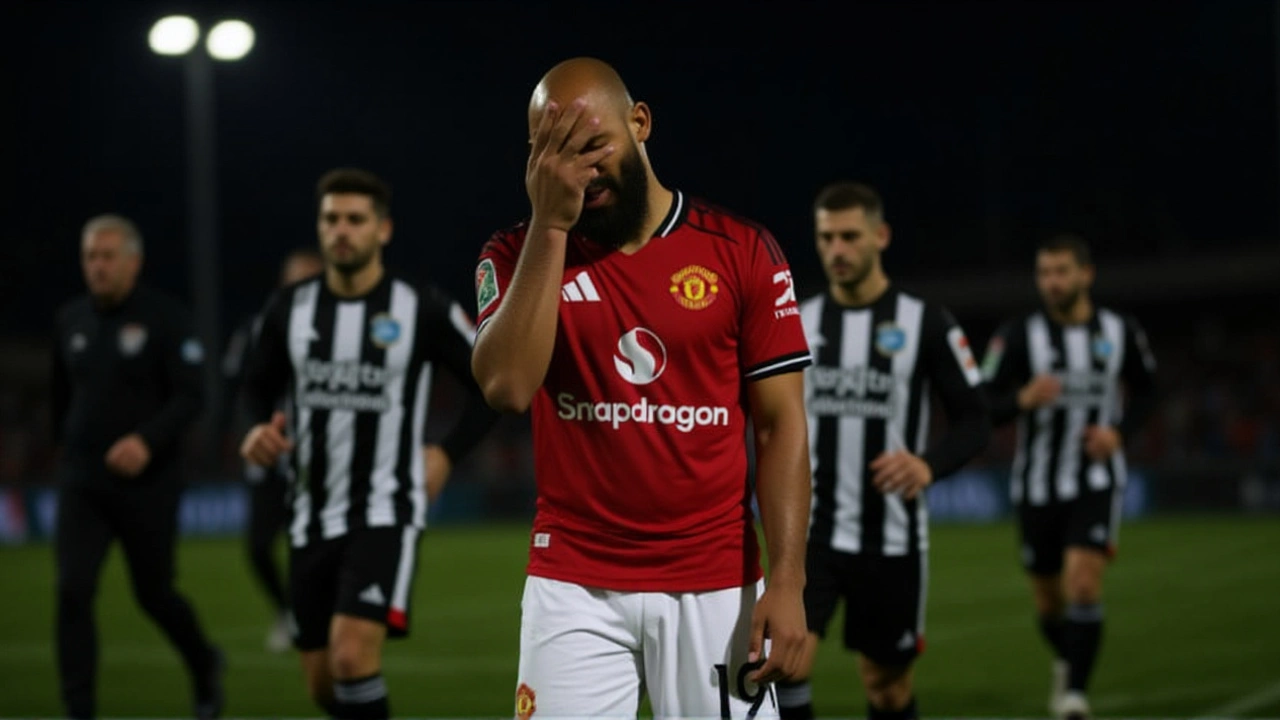
Grimsby Town won a penalty shootout 12-11 against Manchester United — but the victory came with a price. On 27 August 2025, the League Two side pulled off one of the most astonishing upsets in Carabao Cup history, surviving 23 consecutive successful penalties to knock out the Premier League giants. But the euphoria didn’t last. Just days later, the English Football League revealed that one of Grimsby’s players had been registered too late, making him ineligible under competition rules. The result stands — but the club now faces an undisclosed fine, and fans are still reeling.
Het duel dat de voetbalwereld sprak
The match, played at an unnamed venue, was supposed to be a formality. Manchester United, fresh off a top-four push in the Premier League, were heavy favorites. Grimsby, battling to avoid relegation in League Two, were seen as cannon fodder. But football, as always, had other plans. The game ended 2-2 after 90 minutes. Then came the shootout — a 23-penalty marathon that became the longest in Carabao Cup history. Every single kick was scored. No one missed. Not once. Goal.com called it "exhilarating," "intense," and "dramatic." For Grimsby’s 8,000 traveling fans, it was pure magic. For Manchester United’s 40,000 in attendance? Pure shock.De fout in de administratie
The English Football League confirmed on 2 September 2025 that the breach involved a player who wasn’t registered within the mandatory 24-hour deadline before the match. Rule E21 of the EFL Regulations is clear: any player not registered by that deadline is ineligible for cup competition. It’s not a technicality — it’s a hard rule. And yet, for a club with limited staff and resources, like Grimsby Town, administrative errors happen. The player’s name? Not disclosed. The reason for the delay? Still unclear. Was it a clerical mix-up? A missed email? A system glitch? The club has said nothing publicly. Meanwhile, the EFL, headquartered in Preston, chose not to overturn the result — a decision that has sparked outrage.Man United-fans eisen herkansing
On social media, Manchester United supporters erupted. #ReplayManU trended across Twitter, Reddit, and fan forums. "How is a fine enough punishment?" asked one fan. "They played with an extra eligible player during the shootout. That’s not just a mistake — that’s an unfair advantage." Others pointed out that Grimsby’s ineligible player took the 11th penalty — the one that sealed the win. "If he hadn’t been on the pitch, we might’ve won," wrote a fan from Manchester. The EFL’s statement, published on efl.com, made no mention of replaying the match. It simply read: "The breach relates to the Club fielding an ineligible player against Manchester United in a Round Two tie on 27 August 2025."Waarom geen herkansing?
Historically, the EFL has rarely overturned results for ineligible players — unless the violation directly affected the outcome. In 2018, for example, Wigan fielded an ineligible player against Brighton in the FA Cup. The result stood, and Wigan were fined £5,000. In 2021, a similar case involving a lower-league club in the EFL Trophy ended with a fine and no replay. The logic? Once a match is played and completed, the integrity of the result is preserved unless there’s clear evidence of intent or advantage. But here’s the twist: this wasn’t just any match. It was a penalty shootout that went to 23 kicks. The ineligible player didn’t just play — he scored the winning penalty. That’s why the backlash is so intense. Critics argue: if the player had been disqualified before the shootout, Manchester United would’ve faced a different opponent — one with fewer options. The EFL, however, has not indicated any change to its stance.
De impact op lagere divisies
This case has reignited debate about the burden on smaller clubs. Grimsby Town operates on a fraction of Manchester United’s budget. Their administrative team likely consists of two or three people juggling player registrations, travel logistics, and media requests. The EFL’s 24-hour deadline, while logical for top-tier clubs, can be a minefield for lower-league teams with limited IT infrastructure. Football governance experts warn that if the EFL doesn’t offer clearer guidance or support to smaller clubs, more mistakes like this will happen. "It’s not about sympathy," said one former EFL official. "It’s about sustainability. If we keep punishing clubs for administrative errors they can’t reasonably avoid, we’re punishing the sport’s foundation."Wat komt er nu?
Manchester United has 14 days to file a formal appeal. No one expects them to drop it. If they do, the EFL’s decision will be reviewed by an independent tribunal. The outcome could set a precedent: will future violations carry heavier consequences? Could the EFL introduce a grace period for lower-league clubs? Or will fines remain the standard — even when a team wins a cup tie through an ineligible player? Meanwhile, Grimsby Town has quietly moved on. They’ve already been drawn in the next round, set to face a Championship side in late October. The club hasn’t issued a statement. Not a word. Not even a tweet. That silence speaks volumes.De regels achter de regels
The Carabao Cup, officially the EFL Cup, has been running since 1960. It’s one of the most unpredictable tournaments in football. Upsets are common. But this time, the upset came with a legal asterisk. The EFL’s regulations require clubs to submit player registrations 24 hours before kickoff. For Premier League teams, that’s routine. For Grimsby, with a part-time staff and a volunteer registration officer, it’s a gamble. The fine, though undisclosed, could be anywhere from £10,000 to £100,000 — the maximum under Rule E21. But money isn’t the real issue. It’s perception. Can fans trust a competition where a team wins a shootout with a player who shouldn’t have been there?Frequently Asked Questions
Waarom werd het resultaat niet ongedaan gemaakt?
De EFL houdt zich aan een langdurig precedent: wedstrijden worden niet herhaald tenzij er bewijs is dat de schending direct het resultaat beïnvloedde — en zelfs dan is dat zeldzaam. Hoewel de ongerechtigde speler de winnende strafschop scoorde, werd de wedstrijd volgens de regels voltooid. De EFL kiest voor een boete in plaats van een herkansing, omdat de wedstrijd op een legale manier werd gespeeld — behalve voor de registratiefout. Een herkansing zou ook de andere 22 strafschoppen ongeldig maken, wat juridisch en logistiek onhaalbaar is.
Wie is de ongerechtigde speler en waarom werd hij niet geregistreerd?
De identiteit van de speler is nog niet openbaar gemaakt, en de exacte oorzaak van de registratiefout is onbekend. Mogelijke redenen zijn een vergeten e-mail, een technische fout in het EFL-systeem, of een administratieve vertraging door een klein team. Grimsby Town heeft geen verklaring afgelegd, wat de frustratie bij fans en analisten verhoogt. Het is een teken van de beperkte middelen van lagere divisies, waar één fout de hele club kan verwoesten.
Wat zijn de gevolgen voor Grimsby Town als ze beroep doen?
Grimsby Town kan geen beroep indienen — het is Manchester United dat 14 dagen heeft om een beroep in te dienen. Als dat gebeurt, zal een onafhankelijk tribunaal de zaak beoordelen. Grimsby zou dan moeten verdedigen dat de fout niet opzetelijk was. Een succesvol beroep van Manchester United zou de wedstrijd kunnen annuleren — maar dat is zeer onwaarschijnlijk. De EFL heeft duidelijk gemaakt dat de resultaten intact blijven, tenzij er sprake is van opzet of fraude.
Zal dit de toekomstige regels voor de Carabao Cup veranderen?
Mogelijk. De incidenten zoals dit drukken op de EFL om een flexibeler systeem te introduceren voor lagere divisies — bijvoorbeeld een 48-uurs termijn of een "goede trouw"-uitzondering voor onbedoelde fouten. Voormalige bestuurders suggereren dat een digitale herinneringssysteem voor clubs met minder dan 10 administratieve medewerkers kan helpen. Maar tot nu toe zijn er geen officiële plannen. De EFL houdt vast aan de regels — ook al zijn ze soms onrealistisch voor kleinere clubs.
Hoe vaak gebeurt dit soort fouten in de Engelse voetbalcompetities?
Ongeveer twee tot drie keer per seizoen in de EFL Cup of FA Cup. In 2022 werd een speler van Leyton Orient ongeldig verklaard, maar de wedstrijd bleef staan. In 2020 verloor een League One-club een wedstrijd na een herkansing omdat de speler al geschorst was. De meeste gevallen eindigen met een boete van £5.000 tot £25.000. Wat dit geval uniek maakt, is de omvang van de wedstrijd — een Premier League-club verslagen door een League Two-ploeg via een 23-penalty shootout. Dat maakt de fout niet alleen belangrijk, maar ook symbolisch.
Wat betekent dit voor andere kleine clubs in Europa?
Het is een waarschuwing voor alle kleine clubs die meedoen aan nationale bekers. In Duitsland, Frankrijk en Italië zijn de regels vergelijkbaar — maar de boetes zijn vaak strenger. In Nederland, bijvoorbeeld, zou een dergelijke fout leiden tot een automatische verliesstelling. De EFL kiest voor een milder benadering, wat veel kleinere clubs fijn vinden — maar ook de concurrentie eerlijkheid ondermijnt. Dit geval kan de Europese voetbalbonden ertoe aanzetten om hun regels te harmoniseren, vooral bij toernooien met clubs uit verschillende divisies.